
A rubber fender strip protects the hull and edge of a boat from damage on contact with a jetty, quay or other vessel. At the same time, the profile contributes to a neat finish. DG Rubber Profiles makes rubber fender strips for tenders, motorboats, yachts and workboats.
You can choose from existing profile shapes or fully bespoke work. A suitable solution can also be developed to replace an existing profile. A photo, technical drawing, dimensions or a piece of the current profile is often enough for an initial assessment.
Large stock of moulds
There is a good chance that a suitable cross-section is already available.
In-house production in the Netherlands
Existing profile shapes and fully bespoke work.
Response within 24 hours
Based on a photo, drawing, dimensions or sample.
Which fender strip suits a boat?
The right fender strip depends on the hull shape, load, available fitting space and the look you want. Material, hardness and fitting method also play an important role. You will find more background in the knowledge base, including the guide to choosing the right fender strip and the article on hollow and solid fender strips.
D-shaped fender strip
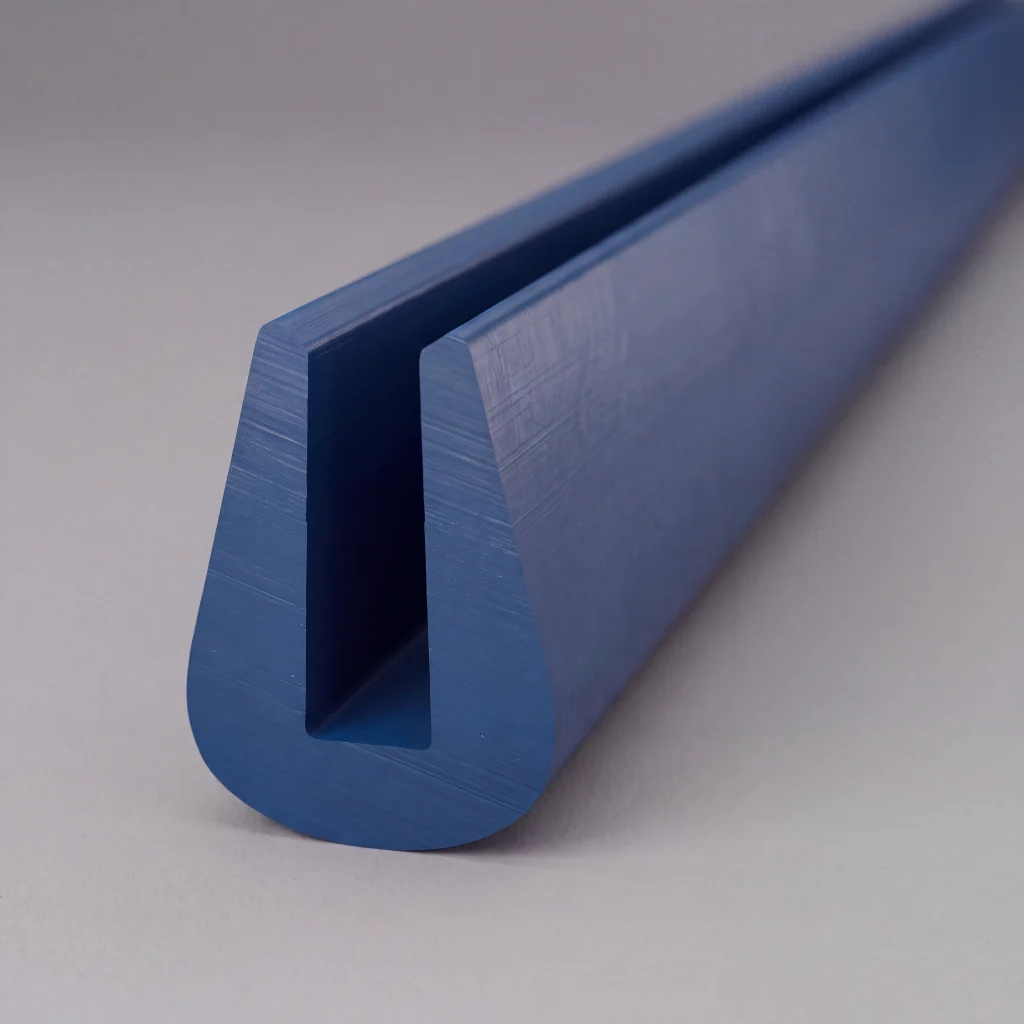
A D-shaped profile has a flat mounting side and a rounded outer side. This shape is widely used as impact protection along the bow and hull.
Edge profile
For constructions where a profile must close around an existing edge or panel, a suitable edge profile can be used, such as a U profile that clamps around the edge.
Two-piece fender strip
With more intensive use, a two-piece fender strip can be a good option. It consists of a base profile and a separate outer profile. When worn, the outer part can be replaced while the base profile stays in place.
Custom rubber fender strips
Not every boat suits a standard profile. That is why DG Rubber Profiles also makes custom rubber fender strips. With a large stock of existing moulds, there is a good chance that a suitable cross-section is already available.
If the required shape does not yet exist, a new mould can be developed from a technical drawing, sample or dimensions. The result is a profile that suits the shape of the boat, the available space and the protection you need.
With older boats too, custom work can be the answer when the original profile is no longer available. An existing piece of profile can be compared with the available moulds.
TPE for marine impact protection profiles
TPE is used for DG Rubber Profiles’ impact protection profiles. This material combines flexibility with wear resistance and is suitable for prolonged outdoor use. TPE stands up well to sunlight, ozone and changing weather conditions.
The hardness can be tailored to the application. A softer profile deforms more and can absorb more energy. A harder version keeps its shape better. Various colours are also possible.
Replacing an existing fender strip
If a fender strip is worn or the original profile is no longer available, a piece of the existing profile can be compared with the available moulds or developed anew. A sample provides the most information, but clear photos with dimensions also help with an initial assessment.
How to spot wear, remove the old profile and have a suitable replacement made is explained on the page replacing a boat fender strip.
Fitting a rubber fender strip
Depending on the profile and the surface, a rubber fender strip is screwed, bonded or clamped. With a two-piece strip, the base profile is fixed first and the wear part is fitted afterwards.
The fitting methods and points to watch at bends, joints and fittings are covered on the page fitting a rubber fender strip on a boat.
From enquiry to production
- Assessment. The application is assessed from a drawing, photo, sample or dimensions.
- Tailoring. We look at the profile shape, dimensions, hardness, colour and fitting.
- Mould. DG Rubber Profiles checks whether an existing mould is available. If a new shape is needed, a custom solution is worked out.
- Production and delivery. Once approved, production takes place in the Netherlands and the profile is delivered in the agreed version and quantity.
Boat fender strips in practice
Rubber fender strips are widely used in recreational boating and professional shipbuilding. DG Rubber Profiles supplies custom profiles for various types of boat and construction.
For LEKKER Boats, rubber profiles are used that bring together protection and appearance. For Tinnemans Shipbuilding, a special impact protection profile was developed for a new type of boat.
Why DG Rubber Profiles?
DG Rubber Profiles has specialised in rubber profiles since 2014 and combines a large stock of moulds with in-house production and custom capabilities. This means we can quickly check for many enquiries whether an existing solution is available.
If a standard profile does not fit, a new shape can be developed. Our specialists will advise you on material, profile shape, hardness and application. We respond to enquiries within 24 hours.
Frequently asked questions about boat fender strips
Which impact protection profile suits a boat?
That depends on the hull shape, load, available space and fitting method. D-shaped profiles are widely used for protection along the hull. Custom work is possible for unusual shapes.
What material are the fender strips made of?
DG Rubber Profiles’ impact protection profiles are made of TPE. This material is flexible, wear-resistant and UV-resistant. Hardness and colour can be tailored to the application.
Are rubber fender strips available in different colours?
Yes. Various colours are possible depending on the profile and application. Hardness and dimensions can also be tailored.
How is a fender strip fitted to a boat?
That varies by profile and surface. Fitting can be done with screws, adhesive, a clamped connection or an existing rail construction, for example.
Enquire about a rubber fender strip for a boat
Need a new fender strip or want to replace an existing profile? Send a technical drawing, photo, dimensions or a piece of the current profile. DG Rubber Profiles will assess which profile shape fits and whether an existing mould can be used.
If custom work is needed, a suitable solution is worked out for the boat and application.