
A rubber fender strip protects the hull and edge of a boat from knocks and wear. Good fitting is just as important as choosing the right profile. The fixing must suit the shape of the boat, the type of fender strip and the surface.
DG Rubber Profiles supplies impact protection profiles that can be screwed, bonded or clamped, depending on the version. On existing boats, the current fixing can also be considered, so that a new profile fits the construction well.
Screwing
Mechanical fixing to suit the profile shape and load.
Bonding
For profiles with a flat mounting surface on a clean, dry base.
Clamping
Around an existing panel edge, without visible screws.
Two-piece fender strip
Base profile with a replaceable wear part.
Fitting starts with the right impact protection profile
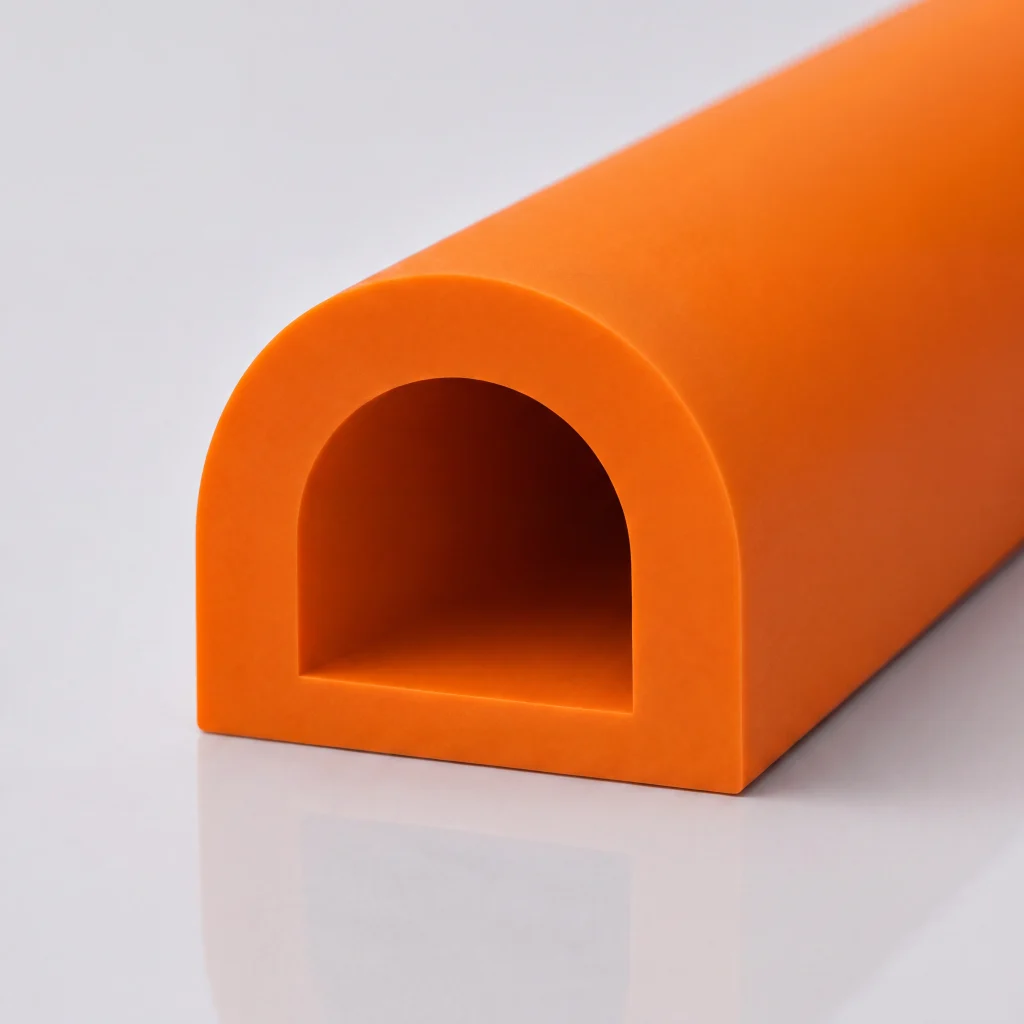
Fitting a fender strip starts with choosing the right profile. A D-shaped profile has a flat mounting side and is widely used along the bow and hull. Depending on the version, this profile can be bonded, screwed or clamped.
A clamping profile closes around an existing panel edge, so it can be fitted without visible screws. Under heavy loads, a two-piece fender strip can be a good option. The base profile is fixed first and the replaceable wear part is then fitted.
The available space, hull shape, load and desired finish determine which solution fits. A photo, technical drawing or dimensions are often enough for an initial assessment.
Screwing a fender strip
Screw fixing provides a mechanical connection and is used when the profile and the underlying construction are suitable. The fixing points must suit the profile shape and the load during use.
The rubber must not be deformed unnecessarily during fitting. At bends and transitions too, the profile must fit without excessive tension.
Bonding a fender strip
Bonding is suitable for profiles with a flat mounting surface and a base on which a lasting bond is possible. A clean, dry and well-prepared surface is important.
Which adhesive is suitable depends on the profile material and the surface. So check in advance whether the combination of materials is suitable for bonding.
Clamping a fender strip
Clamping profiles are placed around an existing panel edge or construction. The internal dimension must suit the thickness of the edge, so that the profile grips sufficiently without unnecessary deformation.
In some applications, additional bonding can be used. The right version depends on the construction and load. For its current clamping profiles, DG Rubber Profiles indicates that clamping, optionally combined with adhesive, can be used as a fitting method.
Fitting a two-piece fender strip
A two-piece fender strip consists of a base profile and a separate wear part. The base profile is fitted first, after which the outer profile is added.
This means that wear does not always require replacing the entire fender strip. The outer part can be renewed separately while the base profile stays in place. That makes this version attractive for boats and other marine applications subject to regular loads.
Fitting on an existing boat
If a new fender strip is being fitted where a profile has been before, the surface must first be clean, dry and free of adhesive residue. Also check whether old fixing points are usable or need repairing first.
How to spot wear, remove the old profile and have a suitable replacement made is explained on the page replacing a boat fender strip.
Points to watch for a neat fit
Check the profile, surface and dimensions before final fitting begins. With long lengths and curved hulls, it is wise to position the profile along the construction first.
Pay particular attention to the fit at bends, the position of joints and the space around fittings. Many fitting problems result from choosing the wrong profile, incorrect dimensions, insufficient surface preparation or too much tension in the rubber.
A well-fitting fender strip therefore always starts with the right cross-section and fixing method.
Need a new fender strip?
If the existing fender strip is worn or a standard profile does not fit, DG Rubber Profiles can advise you on a replacement or new version.
You can choose from existing D profiles, impact protection profiles, clamping profiles and two-piece fender strips. Which profile shape suits your boat is explained on the page rubber fender strips for boats.
Production takes place in the Netherlands and we respond to enquiries within 24 hours.
Frequently asked questions about fitting fender strips
How is a rubber fender strip fixed to a boat?
That depends on the profile and the construction. Possible fitting methods are screwing, bonding and clamping. Some profiles can be fixed in more than one way.
How do you avoid tension at bends?
With long lengths and curved hulls, position the profile along the construction before fixing it permanently. The rubber must follow bends and transitions without being stretched or unnecessarily deformed.
In what order is a two-piece fender strip fitted?
The base profile is fixed to the boat first. The outer wear part is then fitted in or on the base profile.
What are common causes of fitting problems?
Many problems result from choosing the wrong profile, incorrect dimensions, an insufficiently prepared surface or too much tension in the rubber.
Enquire about a fender strip for a boat
Want to replace an existing fender strip or fit a new profile? Send a technical drawing, photo, dimensions or a piece of the current profile. DG Rubber Profiles will assess which profile shape and fitting method suit the application.
If the shape you want is not yet among the available profiles, a custom solution can be developed.