
The heaviest load in a gym lands under a deadlift platform, squat rack or dumbbell zone. A barbell coming down damages an ordinary floor, transmits noise to the room below and sends vibrations through the whole gym.
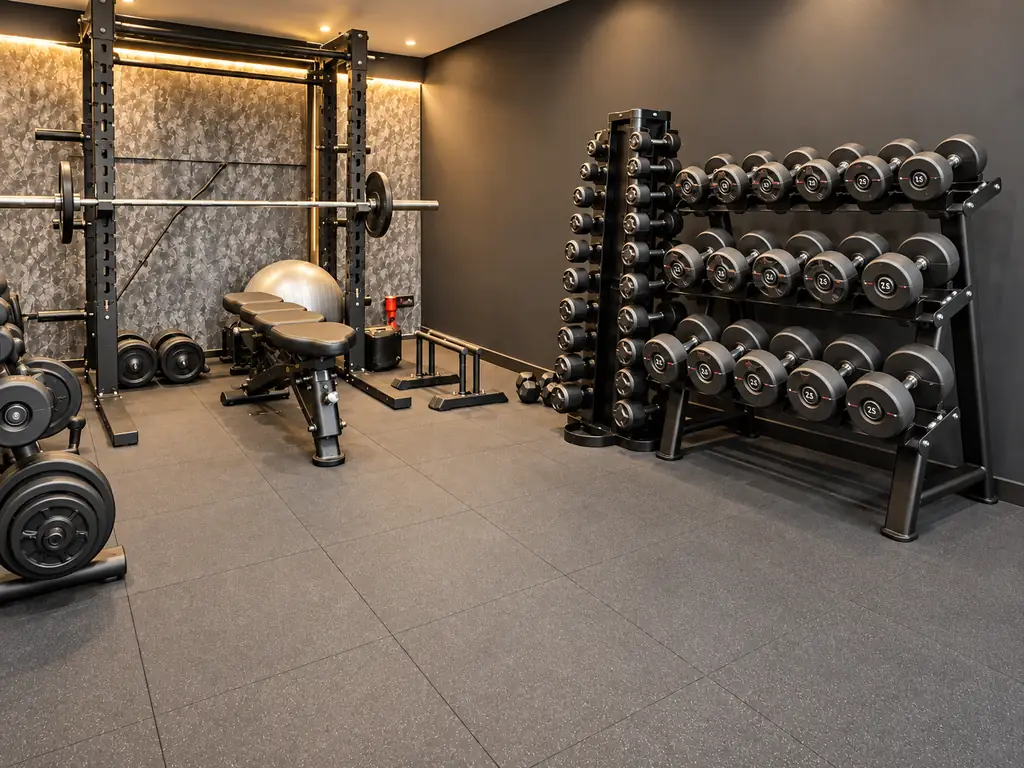
DG Rubber Profiles’ rubber gym tiles absorb that load. The 20 mm thick layer of SBR rubber granules bonded with PU adhesive protects the subfloor, dampens noise and provides grip underfoot. Laid loose, so tiles can be replaced one by one if a zone takes heavier loads.
20 mm thick
Absorbs the impact of free weights and protects the subfloor.
Noise reduction
Keeps the noise of deadlifts, racks and dumbbells in the room.
1,000 × 1,000 mm
Large tile with straight joints for platforms and rack zones.
Replaceable tile by tile
Laid loose, so heavily loaded zones can be replaced separately.
Why rubber under free weights?
Free weights load a floor differently from cardio machines. A treadmill stands still in its place, whereas a hundred-kilo barbell comes down dozens of times per session. That repeated point loading damages tiles, concrete and wooden floors and causes noise and vibration.
20 mm thick rubber tiles spread that load and give with it. The subfloor stays undamaged, the noise stays in the room and the grippy rubber structure keeps your feet in place during heavy lifts.
Zones for free weights
Deadlift platform
The spot where a barbell lands hardest. The large 1,000 × 1,000 mm tile gives a platform with minimal joints that absorbs the impact and dampens the noise. Optionally in colour to mark the platform.
Squat rack and weight bench
A stable, level surface under the rack, with grip for squats and bench presses. The rubber protects the floor from plates set down next to the rack.
Dumbbell zone
Dumbbells and kettlebells come down often and hard. The rubber layer absorbs the impact, and the tiles can be replaced individually if this zone wears faster than the rest of the floor.
Keeping noise and vibration in the room
A barbell coming down produces noise and a vibration that travels through the floor to the rest of the building. For a gym on an upper floor, next to an office or in a residential area, that is the main reason to choose rubber.
The 20 mm thick rubber layer absorbs the impact and converts the energy into deformation of the rubber rather than noise and vibration. The noise stays in the room and the floor below stays intact.
The heavier the load in a zone, the more important a closed floor without open joints becomes. That is why the large 1,000 × 1,000 mm tile is the size for platforms and rack zones.
Marking zones with a coloured EPDM top layer
The tiles are black as standard. The 1,000 × 1,000 mm tile is also available with an EPDM top layer in various colours. Use it to make a deadlift platform, rack zone or walkway instantly recognisable in the room, without lines or tape.
Because the tiles are laid loose, you can add or move coloured tiles later if the layout of the gym changes.
One floor for weights and machines
The tiles are suitable for free weights, racks and cardio machines in one space, so you do not need to divide the gym into different floors. For smaller rooms and home gyms, there is the compact 540 × 540 mm size; read more about it under rubber flooring for a home gym. All specifications and sizes can be found on the rubber gym flooring page.
From request to delivery
- Enquiry. Tell us the dimensions of the zone or entire gym, with the position of platforms, racks and dumbbell racks.
- Advice. DG Rubber Profiles advises on the size for each zone and on coloured tiles for marking.
- Quote. You will receive a response with a quote for the number of tiles and colours within 24 hours.
- Delivery. The tiles are delivered and laid loose on a level surface. Heavily loaded zones can later be replaced tile by tile.
Why DG Rubber Profiles?
DG Rubber Profiles has specialised in rubber since 2014 and produces in Biddinghuizen. The gym tiles are supplied to gyms and PT studios, from a single deadlift platform to a complete gym with marked zones.
We respond to enquiries within 24 hours. Include a floor plan of the gym and you will receive a proposal for each zone.
Frequently asked questions about rubber floors for free weights
How thick should a rubber floor for free weights be?
DG Rubber Profiles’ gym tiles are 20 mm thick. That thickness absorbs the impact of dumbbells, barbells and kettlebells and protects the subfloor from damage.
Is a rubber floor suitable for a deadlift platform?
Yes. The 20 mm rubber layer absorbs the load of a barbell coming down and keeps the noise in the room. With the large 1,000 × 1,000 mm tile, you can lay a platform with minimal joints.
Can I mark a deadlift zone in a different colour?
Yes. The 1,000 × 1,000 mm tile is available with an EPDM top layer in various colours, so a platform or zone is instantly recognisable in the room.
How do I prevent noise nuisance from falling weights?
Rubber dampens the noise and vibration of weights coming down. The 20 mm thick tiles keep the noise in the room, so less of it carries through to adjacent spaces.
What if a zone wears faster than the rest of the floor?
Because the tiles are laid loose, you only replace the tiles in that zone. The rest of the floor stays in place.
Enquire about rubber flooring for your strength zone
Fitting out a deadlift platform, rack zone or complete strength room? Send us the dimensions or a floor plan. DG Rubber Profiles will advise on size, colour and quantity and respond within 24 hours.