
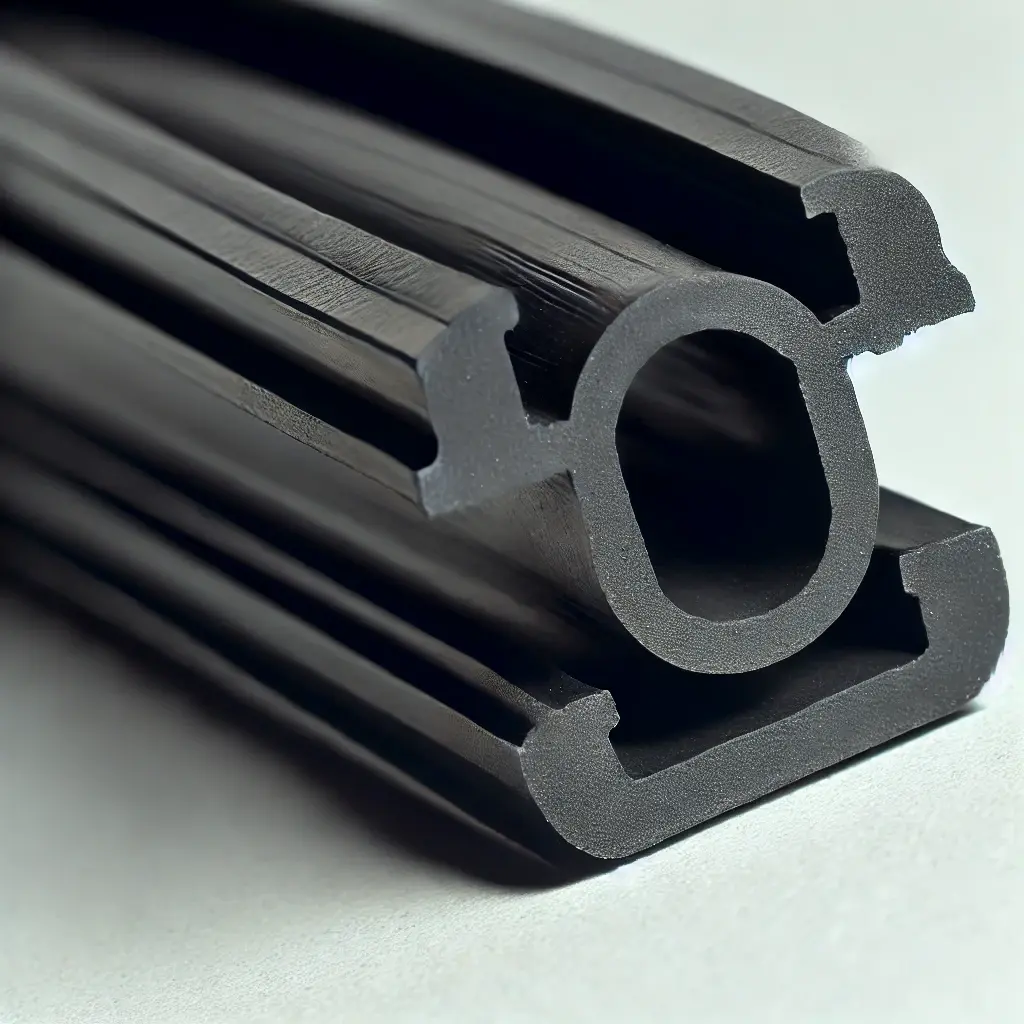
How does the environment influence the choice of material for rubber fender strips?
Rubber fender strips are used in a wide range of conditions, from shipping to industry and logistics. In every situation, factors such as salt water, UV radiation, temperature changes and chemical exposure play an important role in the service life of the material.
Because DG Rubber Profiles specialises entirely in TPE fender strips, we explain on this page why this material performs so well in many of our applications. Not because other materials are unsuitable, but because TPE is the most durable and reliable choice in our specific use cases.
How does rubber react to salt water and moisture?
In marine applications, materials are constantly exposed to moisture, salt and changing loads.
- Materials such as EPDM and natural rubber can absorb water to varying degrees or change in hardness after prolonged exposure.
- TPE keeps its flexibility in this environment and does not absorb moisture, so it remains dimensionally stable.
Quick advice: for applications on boats, pontoons and jetties, TPE works very well thanks to its low water absorption and stability during prolonged contact with salt or fresh water.
How does UV radiation (sunlight) affect the service life of rubber?
UV radiation is an important factor in outdoor applications. Many rubber materials react to it with:
- Slight discolouration
- Slow change in flexibility
This does not mean that these materials are unsuitable, but UV exposure shortens the service life in some applications.
TPE is known for its UV stability:
- It stays colourfast for a long time
- It retains its original flexibility
That is why we choose TPE for fender strips used outdoors for long periods, such as for quay protection, trailers and logistics installations.
What do temperature differences do to rubber?
Rubber materials react differently to temperature:
- At very low temperatures, some rubbers can become less flexible.
- At higher temperatures, shape retention can play a role.
TPE has a wide temperature range in which it stays flexible and dimensionally stable. This makes it suitable for applications where temperature changes are normal, such as:
- Outdoor areas
- Harbour environments
- Transport vehicles
Quick advice: for applications with large temperature differences, TPE offers great stability without extra maintenance.
How does rubber react to chemical exposure such as oil and cleaning agents?
In industrial environments, materials sometimes come into contact with oil, greases or cleaning agents.
- Some traditional types of rubber react to prolonged exposure to oil or chemical substances.
- TPE naturally has high chemical resistance and retains its properties well.
This makes TPE a practical choice for applications in workshops, logistics docks, production halls and transport zones.
How do commonly used rubbers compare with TPE for each environmental factor?
| Environmental factor | Behaviour of commonly used rubbers | Properties of TPE |
|---|---|---|
| Salt water | Can change in hardness over time | Low water absorption, stays dimensionally stable |
| UV radiation | Possible slight discolouration or change in flexibility | UV-stable and colourfast |
| Temperature difference | Elasticity varies by type of rubber | Wide temperature range, stable performance |
| Chemical exposure | Behaviour differs by type of rubber | High chemical resistance |
Which fender strip suits your environment? At DG Rubber Profiles, we supply custom profiles only. Based on your load, environment and construction, we develop a fender strip that exactly matches the application.
→ Request your custom rubber fender strip here
Important: all rubbers have their own advantages. The choice depends entirely on the application, load and environment. DG Rubber Profiles focuses on TPE because this material best suits the sectors in which we operate.
Need technical advice?
Our specialists are happy to look at your application: marine, industrial, logistics or transport.