
Laying rubber stable tiles in a horse stable requires good preparation and accurate measuring. Careful installation is important for comfort, grip, hygiene and the service life of the floor in daily use.
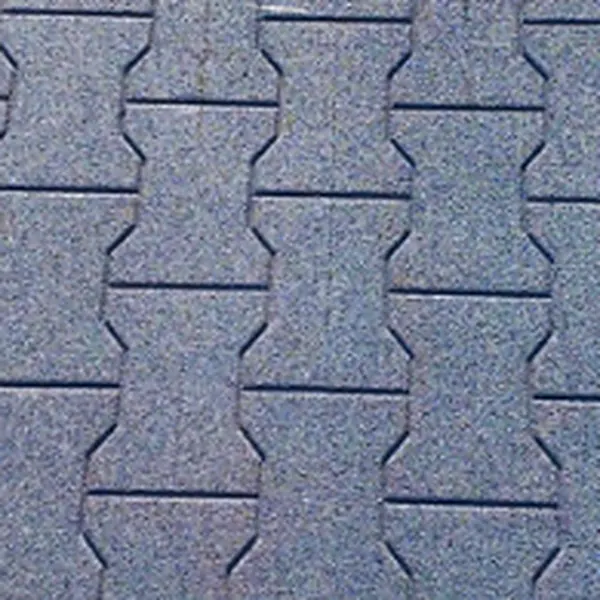
DG Rubber Profiles’ H-model puzzle tiles are made of SBR rubber granulate bonded with urine-resistant PU adhesive. The H shape makes the tiles interlock. They are laid loose, without adhesive or other fixings, so you build up the floor tile by tile in a horse box, aisle or grooming area.
Dimensions
1,100 × 1,125 × 25 mm
Weight
25 kg per tile
Installation
Laid loose, without adhesive or fixings
Cutting to size
Cut standard tiles to fit at walls, corners and edges yourself
What do you need?
To lay the floor, you need the H-model puzzle tiles and the correct dimensions of the space. The tiles are supplied in a fixed standard size. At edges, corners or other unusual shapes, you cut the tiles to size during laying.
- H-model rubber stable tiles of 1,100 × 1,125 × 25 mm
- The length and width of the horse box, aisle or grooming area
- A dimensioned floor plan, so you can see in advance where tiles need cutting at edges or unusual sections
- For measuring and any cutting: a tape measure, a straight guide, a marker and suitable cutting tools
Preparing the surface
The stable tiles are laid loose on the existing surface. Before you start, make sure you have a level, paved surface free of loose dirt.
Measure the space at several points and note any unusual angles, obstacles and passages before deciding on the laying plan. These measurements let you determine in advance how many whole tiles are needed and where you will need to cut tiles during laying.
Laying rubber stable tiles: step-by-step plan
- Measure the space. Measure the length and width of the space and note any unusual angles or recesses.
- Decide on the laying plan. Determine in advance which side you will start from, so that fitted pieces and edges are distributed neatly across the space.
- Lay the first tile. Place the first tile straight along the chosen side of the space.
- Connect the next tiles. Let the H shapes of the tiles interlock and build up the floor tile by tile. Adhesive or other fixings are not needed.
- Cut edges and fitted pieces to size. Measure the remaining space accurately and cut fitted pieces only with tools suitable for this material. The tiles are supplied in a fixed standard size; at walls, corners and obstacles, you cut a standard tile to fit.
- Check the finished floor. After laying, check that all the tiles connect properly and the floor is free of loose parts or offcuts.
Edges and corners to size
Not every horse box or stable space works out exactly in whole tiles of 1,100 × 1,125 mm. Fitted pieces are therefore needed at walls, corners, passages or other non-standard dimensions.
You can cut the tiles yourself; which tools and method are suitable depends on the situation. The stable tiles are produced in a fixed standard size, so at walls, corners and obstacles you cut a standard tile to fit during laying. For cutting and die-cutting other rubber, such as wall and trailer rubber, read more about rubber cutting and die-cutting. Include the dimensions of the stable with your enquiry and DG Rubber Profiles will advise on the laying plan.
How many stable tiles do you need?
Calculate per direction: divide the length of the space by 1.1 m and the width by 1.125 m, round both results up and multiply them. This tells you how many tiles are needed to cover the whole floor, including the tiles from which fitted pieces are cut.
3 × 3 m box
3 ÷ 1.1 = 2.7 → 3
3 ÷ 1.125 = 2.7 → 3
9 tiles
3 × 3.5 m box
3 ÷ 1.1 = 2.7 → 3
3.5 ÷ 1.125 = 3.1 → 4
12 tiles
3.5 × 3.5 m box
3.5 ÷ 1.1 = 3.2 → 4
3.5 ÷ 1.125 = 3.1 → 4
16 tiles
Include the length, width and any unusual shapes of the space with your enquiry. DG Rubber Profiles will then calculate the exact number of tiles and you will see in advance where tiles need cutting during laying.
Maintenance and cleaning
The H-model puzzle tiles are resistant to moisture and urine. The PU adhesive that bonds the SBR rubber granulate is urine-resistant. The material inhibits bacterial growth and is easy to keep clean.
Remove loose dirt and for further cleaning use only a method and cleaning agent suitable for PU-bonded SBR rubber granulate.
Common mistakes when laying
Not checking the surface
A surface that is not level or paved affects the result.
Not measuring accurately
Without accurate measurements, you end up with too many or poorly distributed fitted pieces.
Unsuitable cutting tools
When cutting the tiles to size, use only tools suitable for this material.
Unnecessary gluing
The H-model tiles interlock through their shape. Adhesive or other fixings are not needed.
Rubber for walls, trailers and aisles too
Rubber is not just used on the floor of the box in and around the stable. Custom anti-slip rubber is also available for the aisle and grooming area. Also working on the stable wall or a horse trailer? Then take a look at the options for rubber for stable walls and trailers.
Why DG Rubber Profiles?
DG Rubber Profiles has specialised in rubber since 2014 and produces in Biddinghuizen. The H-model stable tiles are available directly from stock as standard. The tiles are produced in a fixed standard size and can be cut to size during laying.
DG Rubber Profiles responds to enquiries within 24 hours. Need other rubber solutions for your stable or business as well as stable tiles? Then also take a look at rubber for agriculture.
Frequently asked questions about laying rubber stable tiles
Can I lay rubber stable tiles without adhesive?
Yes. The H shape makes the tiles interlock, and they are laid loose, without adhesive or other fixings.
Can I lay the stable tiles myself?
Yes. The tiles are designed to be laid loose. At edges, corners and non-standard dimensions, you cut the standard tiles to size during laying.
What are the dimensions and weight of one stable tile?
One H-model puzzle tile measures 1,100 × 1,125 × 25 mm and weighs 25 kg.
How many stable tiles do I need for my horse box?
Divide the length of the box by 1.1 m and the width by 1.125 m, round both up and multiply the results. For a 3 × 3 m box, that is 9 tiles. Send the dimensions for an exact calculation.
Can the stable tiles be cut to size?
Yes. The stable tiles are produced in a fixed standard size. At walls, corners, edges and obstacles, you can cut a standard tile to size during laying with suitable cutting tools.
Enquire about rubber stable tiles
Want to know how many stable tiles you need, or would you like advice on cutting at edges and non-standard dimensions? Include the dimensions or a drawing with your enquiry. DG Rubber Profiles will respond within 24 hours.