
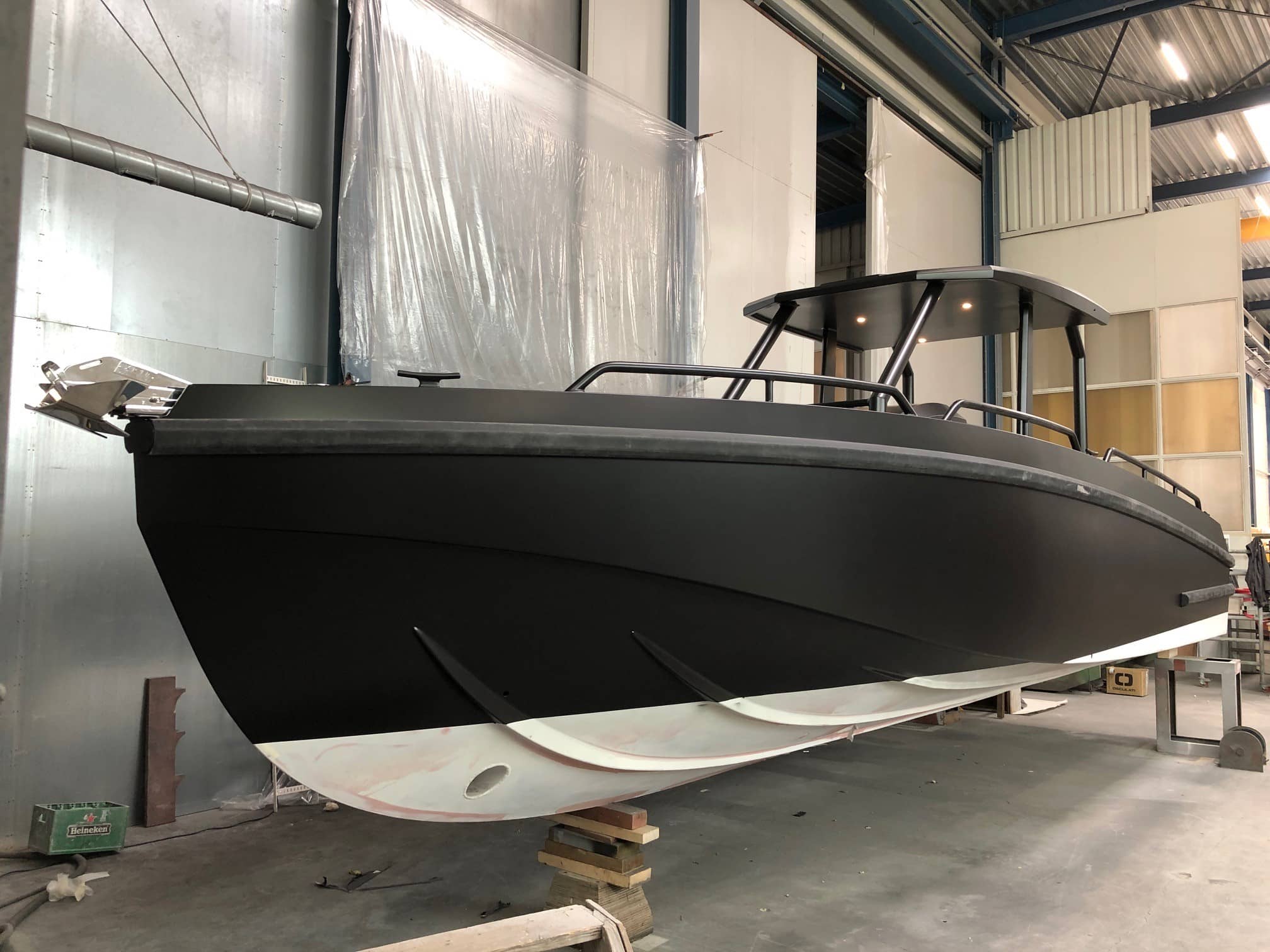
How do you choose the right rubber fender strip for your boat?
The right fender strip is an essential part of protecting your vessel. It prevents damage when mooring and casting off, extends the service life of the hull and improves safety on board. But which fender strip best suits your type of boat? The right choice depends on four factors: the type of vessel, the size and shape of the profile, the material and the fitting method.
This guide explains step by step what to look out for and helps you determine which profile best suits your application.
Step 1: Choose based on the type of boat
Not every vessel needs the same protection. These are the most common choices by type of vessel:
Tenders & motorboats
- Most popular: D profile
- All-round protection in daily use
- Suits rounded and flat hull shapes
Sailing boats & racing boats
- Lightweight and slim profile
- Narrower D or U profiles
- Limited weight and drag are important
RIBs, lifeboats & fast vessels
- High shock absorption required
- Maximum flexibility + energy absorption
- Ideal for dynamic loads
Workboats & commercial vessels
- Intensive use / daily quay contact
- Extra robust shape and wall thickness
- Often custom-fitted to the hull or railing
For all categories: profiles must be resistant to salt water, UV light, ozone and temperature fluctuations.
Step 2: Choose the right size and profile shape
Size and profile shape determine how well the profile fits and how much impact energy it can absorb. The most widely used shapes:
| Profile type | Application |
|---|---|
| D profile | All-round, most widely used for motorboats & tenders |
| U profile | For fitting over flanges, thin hulls or rails |
| L profile | For corners, industrial versions or custom work |
There are also special contour profiles for unusual bow shapes or industrial applications.
DG Rubber Profiles has a large library of moulds. Is the right size not among them? Then the profile is fully custom-engineered to exactly match the shape and load of your vessel.
Want to know more about profile shapes and when to choose which? Read on here about the types of rubber fender strips and their applications.
Step 3: Material choice: why TPE is the best solution
DG Rubber Profiles uses TPE (thermoplastic elastomers) rather than PVC. This material is more durable, stronger and better able to withstand the marine environment.
Benefits of TPE:
- Recyclable and environmentally friendly
- No harmful plasticisers
- Excellent UV and ozone resistance
- High shock absorption and flexibility
- Longer service life and better appearance
TPE remains the best choice for commercial shipping too: the extra durability lies not in the material recipe, but in the profile shape, wall thickness and sizing.
Step 4: Fitting and finishing
The fitting method determines not only how firmly the fender strip is fixed, but also its appearance. Possible fitting options:
- Screwable → robust and replaceable
- Bonding → sleek and invisible
- Clamping → ideal for existing rails
- Hybrid → combined for heavier loads
Our specialists are happy to look at the vessel’s construction and advise on the most suitable fixing method.
When does custom work make sense?
Custom work is advisable when:
- The hull has an unusual bow or stern construction
- The vessel is used intensively for professional purposes
- There are extra-high impact zones
- An existing fender strip needs replacing with an identical look
- Design, material and colour need to be fully integrated
DG Rubber Profiles develops profiles exactly to measure, including guidance on design and application.
Why DG Rubber Profiles?
DG Rubber Profiles supplies fender strips for both recreational boating and commercial vessels. Thanks to our combination of production, engineering and custom work, we supply profiles that perfectly suit the load and hull construction.
Our core expertise:
- Large selection of existing moulds
- Custom engineering possible for any shape or size
- European quality, direct from the manufacturer
- Strong focus on sustainability and long service life
In doubt? Our experts will help you choose
A fender strip is a technical choice, but also a lasting investment. In a brief consultation, we can quickly determine which profile best suits your boat and how you use it.
Frequently asked questions
1. What type of fender strip do I need for my boat?
This mainly depends on the vessel and the load.
- Tenders/motorboats → usually D profile
- Sailing boats → slim and light
- RIBs → highly absorbent
- Workboats → thick-walled and robust
If in doubt, we advise based on a photo or the hull shape.
2. How do I measure which size of fender strip I need?
Measure the width of the mounting location and decide how far the bumper should protrude. We can take a look and recommend a suitable size.
3. What is the difference between TPE and PVC?
PVC is cheaper, but ages faster and often contains plasticisers. TPE is more flexible, more durable, UV-resistant, environmentally friendly and lasts longer.
4. Is there a difference between recreational and professional use?
Yes. Not in material, but in wall thickness, shape and fit. Workboats use thicker profiles for higher impact.
5. Can a fender strip be made to measure?
Yes. We engineer profiles based on your hull, load and desired appearance.
6. How is a fender strip fitted?
Depending on the application: screwing, bonding, clamping or hybrid.
7. How long does a TPE fender strip last?
That varies with the load, but TPE generally lasts much longer than PVC because it is UV, ozone and weather resistant.
8. Does DG Rubber Profiles also advise on selection and fitting?
Yes. With photos or a description of the hull, we can give suitable advice straight away.
Ready to choose the right fender strip?
Looking for custom rubber fender strips for your boat? Read more about our rubber fender strips for boats or request a custom solution straight away. Looking for an application outside the marine sector? View our full range of rubber fender strips.